
Direct Answer
AnyLeak provides leak and moisture detection services in British Columbia using non-invasive methods — acoustic correlation, tracer gas, thermal imaging, and moisture metering — to find leaks without digging or damage. Every inspection includes a written, insurance-ready report. Call (604) 269-5325 for a free phone consult.
🔄 Reviewed and maintained by the AnyLeak team — October 2026. Rated 5 stars by BC customers.
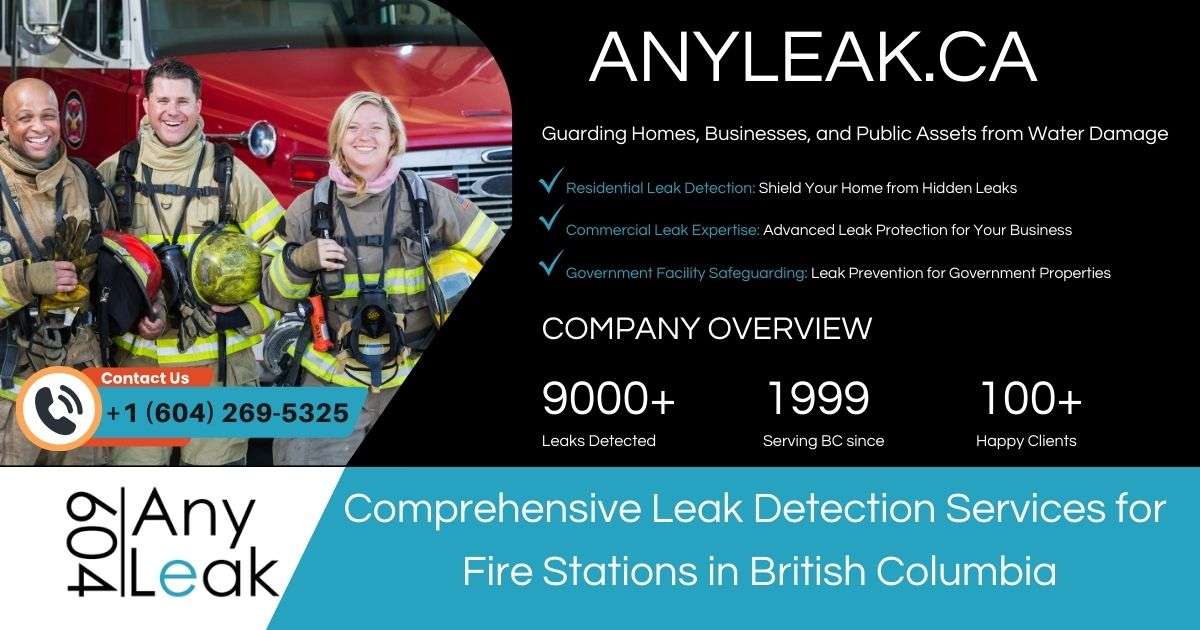
Fire stations are among the most critical infrastructures in any community, particularly in British Columbia, where these facilities serve as the hub for priority response services. Firefighters rely on their stations to be operational and efficient at all times to ensure they can respond quickly to priority cases. However, fire stations, like all buildings, are susceptible to wear and tear—especially from water leaks that can compromise the building’s structure and the essential equipment stored inside. Given the heavy rainfall, high water tables, and fluctuating climate conditions in BC, fire stations are at an elevated risk of water damage.
At AnyLeak, we specialize in offering comprehensive water leak detection, prevention, and repair services for fire stations across British Columbia. Our team of experts uses cutting-edge technology and years of experience to address the unique challenges faced by fire stations, ensuring that they stay fully functional and ready to serve the community. From detecting leaks in plumbing systems to preventing roof leaks, we provide solutions that are accurate, reliable, and non-invasive.
Understanding the Critical Components of Fire Stations in BC
Fire stations are complex buildings designed to house a variety of facilities that are essential for firefighters to perform their duties efficiently. Maintaining these areas is critical for ensuring the smooth operation of priority response efforts. Each component of a fire station plays a crucial role, and any disruption—especially from water leaks—can severely impact the facility’s functionality. Here are some of the key areas in fire stations that are particularly vulnerable to water leaks:
Apparatus Bay
The apparatus bay is one of the most important areas in a fire station. It houses the fire trucks, priority vehicles, and essential firefighting equipment. Any leak in this area can not only damage vehicles but also create unsafe conditions that can delay response times during priority cases. Water pooling in the apparatus bay can lead to rust, electrical malfunctions, and overall degradation of critical equipment.
Administrative Offices
Administrative offices in fire stations are essential for managing day-to-day operations, coordinating fire department logistics, and processing priority calls. Water damage to these areas can affect communication systems, destroy important documents, and interrupt workflows, all of which are crucial for efficient operation.
Living Quarters
Firefighters often spend extended periods at the fire station, making it their home while on duty. Living quarters must be maintained to a high standard to ensure comfort and health. Water leaks in these areas can lead to mold growth, electrical hazards, and unpleasant living conditions, which can negatively affect the well-being of the firefighters.
Training Rooms and Facilities
Training is a vital component of every fire station. Firefighters must regularly engage in drills and exercises to remain prepared for a variety of priority scenarios. Leaks in the training facilities can damage essential training equipment, making it difficult for firefighters to stay up to date on their skills.
Plumbing Systems
Water is crucial for daily station operations, whether it’s for sanitary purposes or priority showers. Any disruptions in the plumbing system, such as leaks or pipe damage, can lead to serious operational issues. A malfunctioning plumbing system can result in water shortages, flooding, and damage to other parts of the building.
Electrical and Mechanical Rooms
Electrical and mechanical rooms house essential equipment like electrical panels, HVAC systems, and water heaters. Water leaks in these rooms can cause electrical shorts, equipment failure, or even fires, making leak detection in these areas a top priority.
Common Water Leak Challenges in Fire Stations
Fire stations in British Columbia face various water leak challenges due to the region’s wet climate, aging infrastructure, and the heavy demands placed on the facility. Here are some of the most common leak-related issues fire stations encounter:
Roof Leaks
Many fire stations have large, flat roofs, which are particularly susceptible to water damage. Over time, heavy rainfall, snow accumulation, and temperature changes can cause roofing materials to deteriorate, leading to leaks. Roof leaks can compromise the apparatus bay, administrative offices, and living quarters, potentially rendering parts of the station unusable during priority cases.
Plumbing Leaks
Aging pipes, excessive water pressure, and poor installation can all contribute to plumbing leaks in fire stations. Leaks in the plumbing system can cause water damage to walls, floors, and ceilings, affecting essential areas like restrooms, kitchens, and priority shower facilities.
Foundation and Basement Leaks
Many fire stations in BC have basements or underground areas where equipment is stored. Due to the high water table and frequent rainfall, these areas are prone to water seepage, which can lead to significant structural damage if left unaddressed. Cracks in the foundation or poor drainage can further exacerbate the problem.
Window and Door Leaks
Older fire stations with outdated or damaged weatherproofing are particularly vulnerable to leaks around windows and doors. Water infiltration through these areas can lead to damage in offices, training rooms, and even the apparatus bay.
Electrical and Mechanical Room Leaks
Leaks in electrical and mechanical rooms pose a significant hazard to fire stations. Water in these areas can lead to equipment failure, electrical shorts, and fire hazards, potentially causing power outages or critical system malfunctions that can affect the entire building.
How AnyLeak Helps Protect Fire Stations from Water Damage
At AnyLeak, we are committed to providing specialized leak detection and repair services that cater to the unique needs of fire stations. Our approach focuses on preventing water damage before it occurs and addressing leaks swiftly to minimize disruptions. Here’s how we protect fire stations across British Columbia:
Advanced Leak Detection Services
Our advanced leak detection technologies allow us to locate leaks quickly and accurately, even in hard-to-reach areas. Some of the tools and techniques we use include:
- Infrared Cameras: Infrared technology helps us detect moisture trapped inside walls, ceilings, and roofing materials, allowing us to pinpoint leaks without causing further damage to the structure.
- Acoustic Leak Detectors: These devices enable us to listen for leaks within plumbing systems, pipes, and underground utilities, ensuring that even hidden leaks are identified and addressed.
- Ground-Penetrating Radar (GPR): We use GPR to detect leaks in foundations and underground piping systems, helping to prevent water from seeping into basements or causing structural damage.
By identifying leaks early, we can prevent significant damage and costly repairs, ensuring that your fire station remains fully operational.
Roof Leak Detection and Repair
Given that fire station roofs are particularly vulnerable to leaks, we offer comprehensive roof inspection and repair services to address any damage before it becomes a major issue. Our roof leak detection services include:
- Infrared Roof Scans: We use infrared cameras to detect areas of trapped moisture beneath the roofing material, allowing us to identify leaks that may not be immediately visible.
- Preventive Maintenance: Regular roof inspections and maintenance are crucial for preventing leaks. We address minor issues like cracked shingles and worn flashing before they can cause significant damage.
- Roof Waterproofing: For long-term protection, we apply durable waterproof membranes and coatings to ensure that your roof can withstand heavy rainfall and snow accumulation.
Plumbing System Leak Detection and Repair
Reliable plumbing is essential for the daily operations of any fire station. Our plumbing services are designed to detect and repair leaks before they lead to water damage, flooding, or service disruptions.
- Pressure Testing: We conduct pressure tests on fire station plumbing systems to identify weak points or leaks in pipes and fittings.
- Pipe Repairs: Whether it’s a minor leak or a major plumbing issue, we provide fast and effective pipe repair services to prevent water damage.
- Sewer and Drain Inspections: Blocked or damaged drains can lead to flooding, especially during heavy rainfall. We provide thorough sewer and drain inspections to ensure that the station’s plumbing system operates smoothly.
Foundation and Basement Waterproofing
Water intrusion in the foundation or basement of a fire station can cause long-term structural damage and create hazardous conditions for equipment and personnel. At AnyLeak, we offer a variety of waterproofing solutions to keep these critical areas dry:
- Exterior Waterproofing: We apply waterproof membranes to the exterior of your foundation to prevent water from seeping into the building.
- Interior Drainage Systems: Our interior drainage systems and sump pumps are designed to divert water away from the basement and foundation, protecting your station from flooding.
- Crack Sealing: Any cracks in the foundation are sealed using advanced materials to prevent further water infiltration.
Window and Door Leak Sealing
Windows and doors are common entry points for water, especially in older fire stations. Our leak prevention services ensure that these areas are properly sealed to prevent water from entering the building.
- Weatherproofing and Sealing: We replace worn-out weatherproofing materials and apply high-performance sealants to windows and doors.
- Waterproof Coatings: We also apply durable waterproof coatings to extend the lifespan of windows and doors, protecting them from the elements.
Electrical and Mechanical Room Protection
Water leaks in electrical and mechanical rooms can cause serious hazards, including electrical shorts and equipment failures. Our services in this area include:
- Moisture Monitoring Systems: We install sensors that monitor moisture levels in electrical and mechanical rooms, alerting station personnel to potential leaks before they cause damage.
- Waterproofing Floors and Walls: We apply waterproof coatings to walls and floors in these critical areas to ensure they remain dry and safe.
- Priority Repairs: In the event of a leak, we provide immediate repair services to minimize damage and ensure that vital equipment remains operational.
Importance of Regular Maintenance for Fire Stations
In addition to our leak detection and repair services, regular maintenance is essential for preventing water damage in fire stations. At AnyLeak, we offer ongoing maintenance programs that include:
- Routine Inspections: Our team conducts routine inspections of roofs, plumbing systems, windows, doors, and foundations to identify potential issues early.
- Preventive Maintenance: Preventive measures such as roof cleaning, drain clearing, and pipe checks help extend the lifespan of your building and prevent costly repairs.
Conclusion
Fire stations are critical infrastructures that must remain operational at all times to ensure public safety. Water leaks and damage can compromise the functionality of these facilities, leading to costly repairs and disruptions in priority services. With AnyLeak’s advanced leak detection, prevention, and repair services, fire stations across British Columbia can protect their facilities from water damage, ensuring that they are always ready to respond to priority cases.
Contact AnyLeak today for a free consultation and learn how our expertise can help protect your fire station from water damage.
Email: info@Anyleak.ca
Phone: +1 (604) 269-5325
A Closer Look at This Service
Water does not negotiate. It moves along the path of least resistance, and every day it moves, the damage grows. The question is not whether to investigate; it is when, and the answer is always sooner rather than later.
The best detection work is done by people who have seen the region’s buildings and buried systems fail in every common way. That experience is what turns a set of readings into a confident, cross-verified answer.
A professional investigation does not end with a verbal summary. It ends with a written report, and that report is the point of the exercise: a document that carries the finding, the evidence, and the guidance to the repair.
How the Investigation Is Delivered
Every investigation follows the same disciplined sequence: consultation, survey, testing, cross-verification, marking, and documentation. The sequence is deliberate, and each step builds on the last.
- Step 1: Consultation to understand the situation and the history
- Step 2: Site survey and indicator mapping
- Step 3: Testing of the suspected systems with matched methods
- Step 4: Cross-verification of the finding
- Step 5: Marking and documentation
- Step 6: Written, dated report
The third mistake is assuming the leak is in the same room as the stain. Water travels along structure for surprising distances, and the visible stain is almost never the source. The investigation traces the path before any repair is planned.
What This Costs
Pricing for this service in British Columbia depends on the scope of the investigation: the systems to be tested, the size of the property, and whether the finding is confirmed with a second method. A fixed quote is provided before any work begins, so there are no surprises on the invoice.
The comparison that matters is not detection cost versus no cost; it is detection cost versus the cost of an undetected leak. One targeted repair, guided by an exact location, almost always costs less than exploratory work and repeated damage.
Insurance and Documentation
For BC policyholders, the practical value is speed: the claim starts with the report already in hand, instead of weeks of back-and-forth while the insurer tries to establish what happened.
Insurance claims fail most often because of missing documentation. A dated, photographed, method-by-method report removes that failure point and gives the adjuster a professional document they can rely on.
What the Report Includes
You keep the report. It documents the finding, the condition at the time of the investigation, and the guidance for the repair, which is useful for warranty, insurance, and future reference.
Reports are dated and structured so that any licensed contractor can take the marked location and proceed directly to the repair. They are also accepted by insurers, engineers, property managers, and, when needed, in dispute processes.
When to Call
Call when a decision needs documentation: an insurance claim, a real estate transaction, a strata dispute, or a warranty process. Those decisions run on evidence, and the evidence has to exist before the deadline.
Call when a repair contractor cannot find the source. Blind replacement of pipe, membrane, or roofing is expensive, and it fails when the true cause is elsewhere. The investigation answers the question the contractor could not.
How to Prepare the Property
If there is an active leak, the priority is containment: shut off the water at the fixture or main if it can be done safely, move valuables away, and photograph the scene. The technician can be guided by phone while en route.
Nothing else needs to be done. The investigation does not require demolition, preparation of the systems, or any work on your part beyond access. Showing up with the history is the whole preparation.
Related Services and Locations
The same standards apply across every service and every community we serve. The links below point to the service pages, city pages, and the site resources most relevant to this topic.
- Water Leak Detection Services in BC
- Underground Water Leak Detection
- Hydrostatic Pressure Testing
- Building Envelope Leak Detection
- Moisture Detection
- Our Guarantee
- How Leak Detection Works
- Reviews
- Contact AnyLeak
Internal links help visitors move between related services and communities, and they help search engines understand how the site’s pages relate to each other.
Common Questions
Is this service non-invasive?
Yes. Every method used works from the surface and leaves no marks. Nothing is cut, dug, or permanently marked during the investigation.
How accurate is the location?
With cross-verified methods, locations are typically within a metre or less, and slab locations within inches.
Is the report useful for insurance?
Yes. The report documents the cause, the extent, the methods used, and the readings, structured for claims and engineering review.
How long does an investigation take?
Most property-level investigations complete within a day, and the written report follows within one to two business days.
Do you repair leaks?
No. Detection and documentation are the service. The report guides the repair contractor to the exact location.
What does this cost?
The quote is fixed before work begins, based on the scope defined in the free consultation. What you are quoted is what you pay.
Call (604) 269-5325 or email info@anyleak.ca for a free consultation. The report is dated, documented, and written to the standard insurers and engineers expect.
★★★★★
"Our flat roof developed a leak, and Anyleak responded quickly. They completed a temporary repair right away."
Sorin Silivestru
Google Review